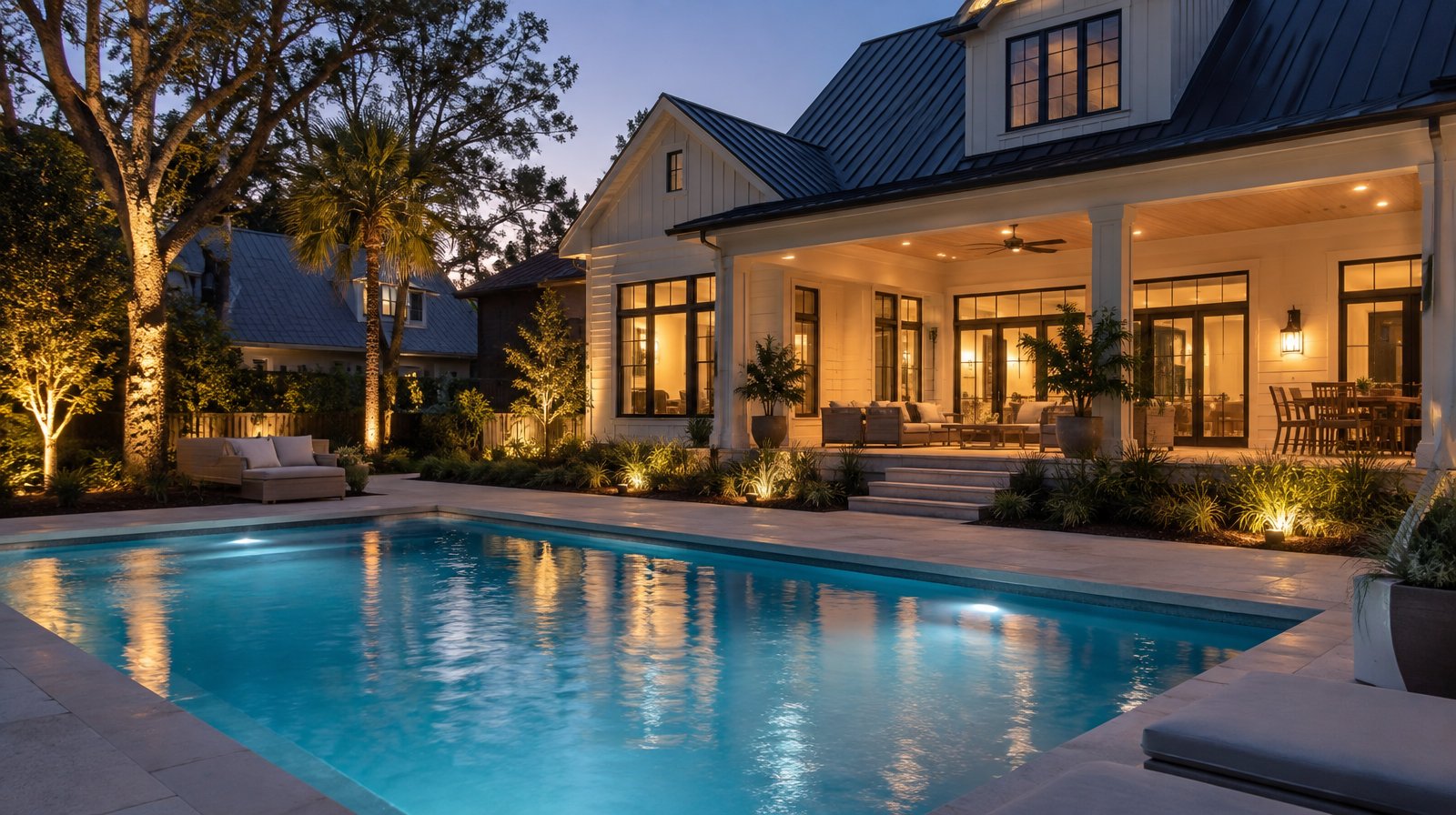
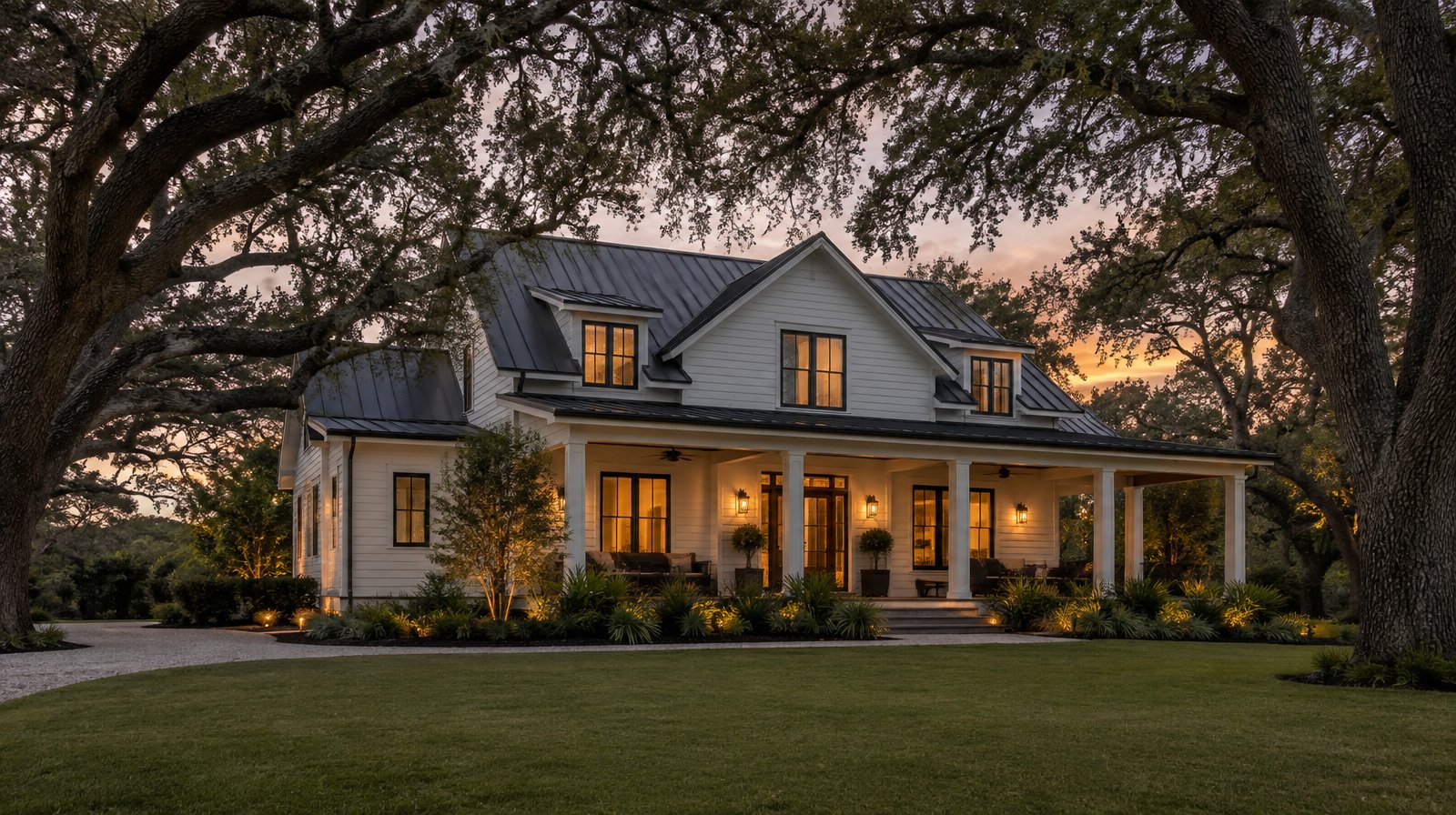
Begin with the layers
Gulf Shores brings its own housing patterns and light conditions. The market combines high-rise beach condos with vacation homes on Alabama’s coast. Those differences should guide the lighting plan before anyone starts counting fixtures. A kitchen needs useful work light, a hallway needs safe movement, and a living room may need several quieter settings across the same day.
Scene-based control is more capable than putting a smart bulb in every socket. It can dim a group of fixtures together, set a repeatable evening level, respond to occupancy, or coordinate interior light with shades and outdoor spaces. The purpose is not to make every light adjustable. It is to make the important changes easy to repeat.
Gulf Shores lighting may serve a full-time household, guests, or a property that sits empty between visits.
Curious what this looks like in your own house in Gulf Shores?Contact the Daisy Gulf Coast team to understand the possibilities.
Fixture and control solve different problems
The fixture determines how light leaves the ceiling, wall, or decorative fitting. The control system determines when it changes and how it relates to other rooms. Lutron is a major reference point for residential lighting control, while DMF Lighting is known for architectural recessed fixtures and modular downlighting.
Those categories work together, but they should not be confused. A beautifully specified DMF downlight still needs the right beam, trim, placement, and dimming behavior. A powerful Lutron system cannot rescue fixtures that create glare or leave the work surface in shadow.
Gulf Shores lighting may serve a full-time household, guests, or a property that sits empty between visits. Entry scenes, low-level nighttime circulation, and simple away settings can matter more than a long list of color effects. Fixtures also need to tolerate the coastal environment and remain easy to service.
Retrofit or new construction?
Existing homes often require a careful audit of circuits, switch boxes, ceiling access, and fixture compatibility. The best first step may be a few key rooms rather than a full-house replacement. Wall controls should be placed where people naturally reach for them, with enough flexibility for guests and future changes.
New construction allows the lighting and control plan to develop with the architecture. Recessed housings, power supplies, dimming loads, keypads, sensors, and equipment access can be coordinated before finishes are installed. That creates more options, but it also makes early decisions important.
Questions worth asking before installation
Ask which fixtures are compatible with the intended dimming system, where control stations will sit, how the scenes will be named, and what happens if a driver or fixture needs service. On the Gulf Coast, indoor lighting should also be considered with the daylight coming through large glass and the outdoor zones visible from the room.
The right plan leaves room for ordinary use. Someone should be able to turn on the kitchen without understanding the full system, while a homeowner can still call up a more nuanced scene when the occasion requires it. Start with the rooms that matter most, then expand only when the control remains clear.